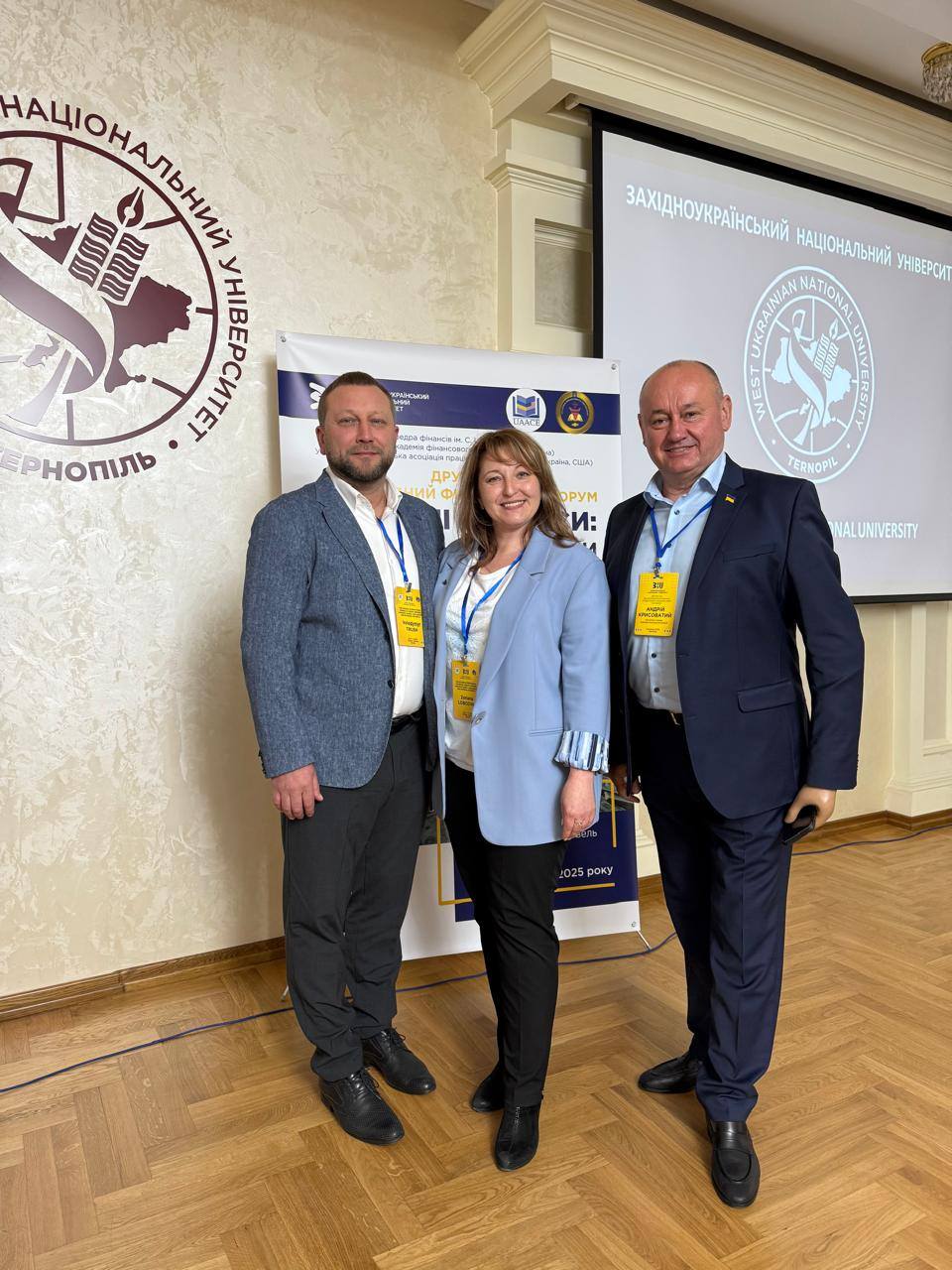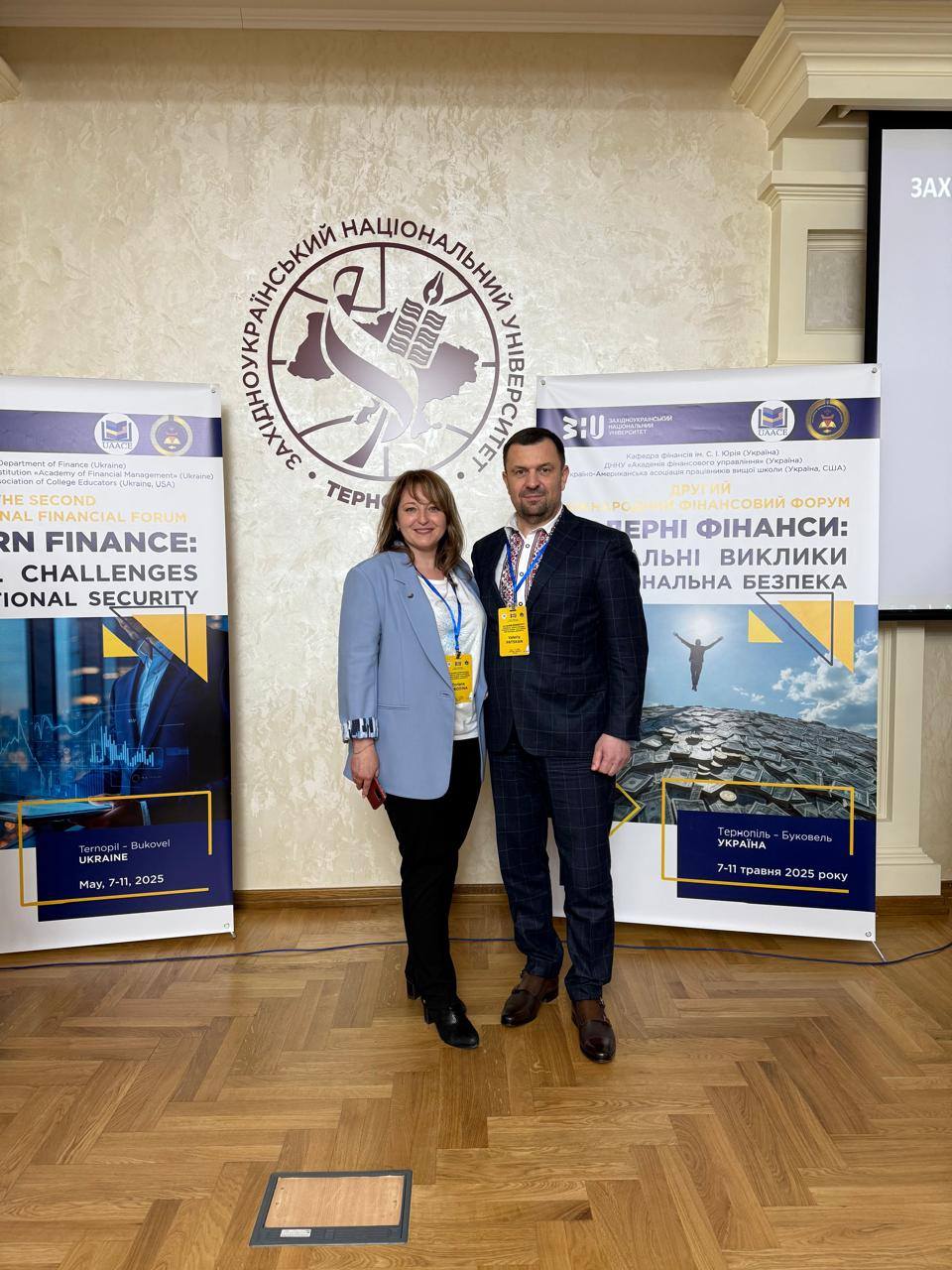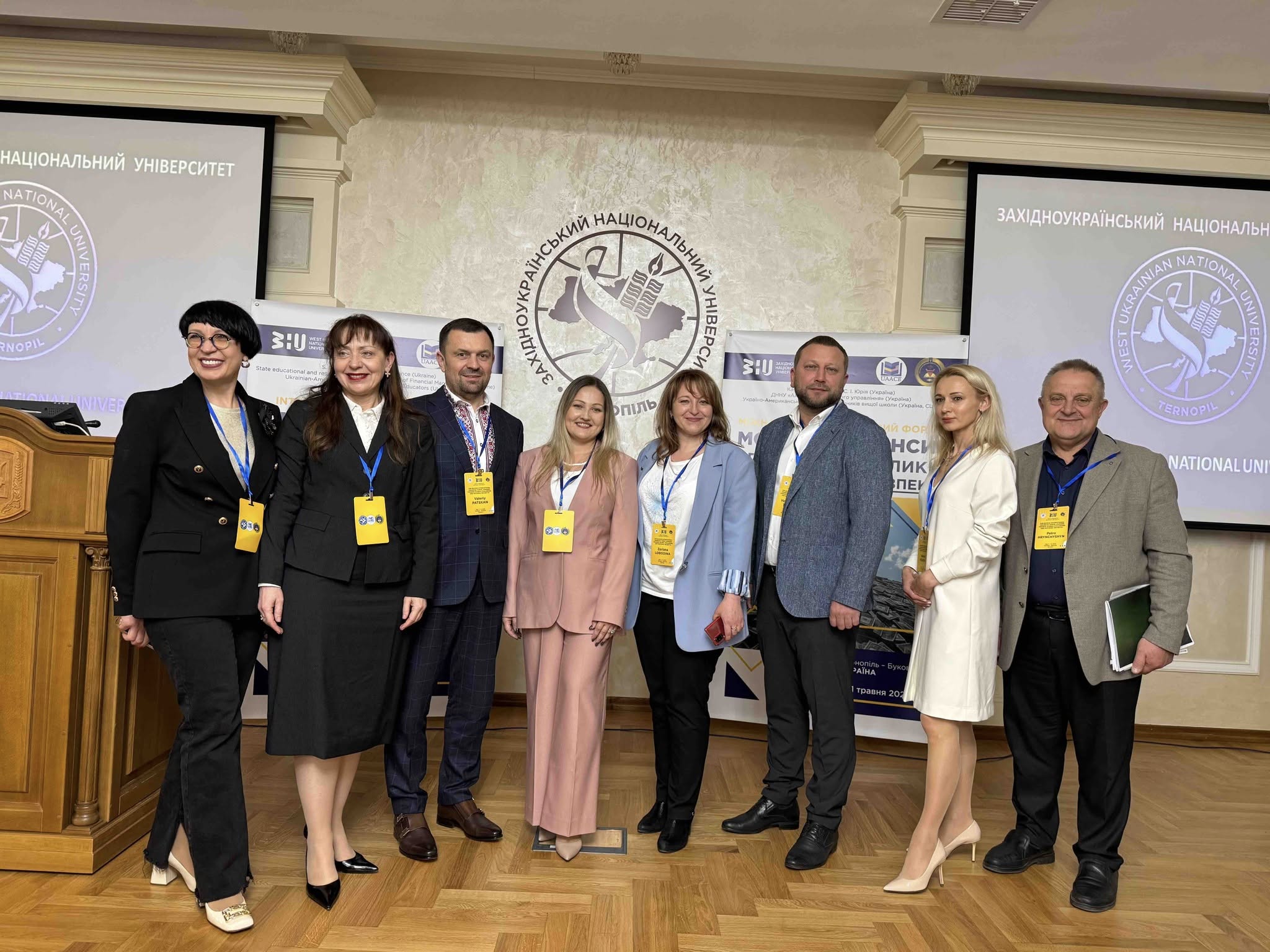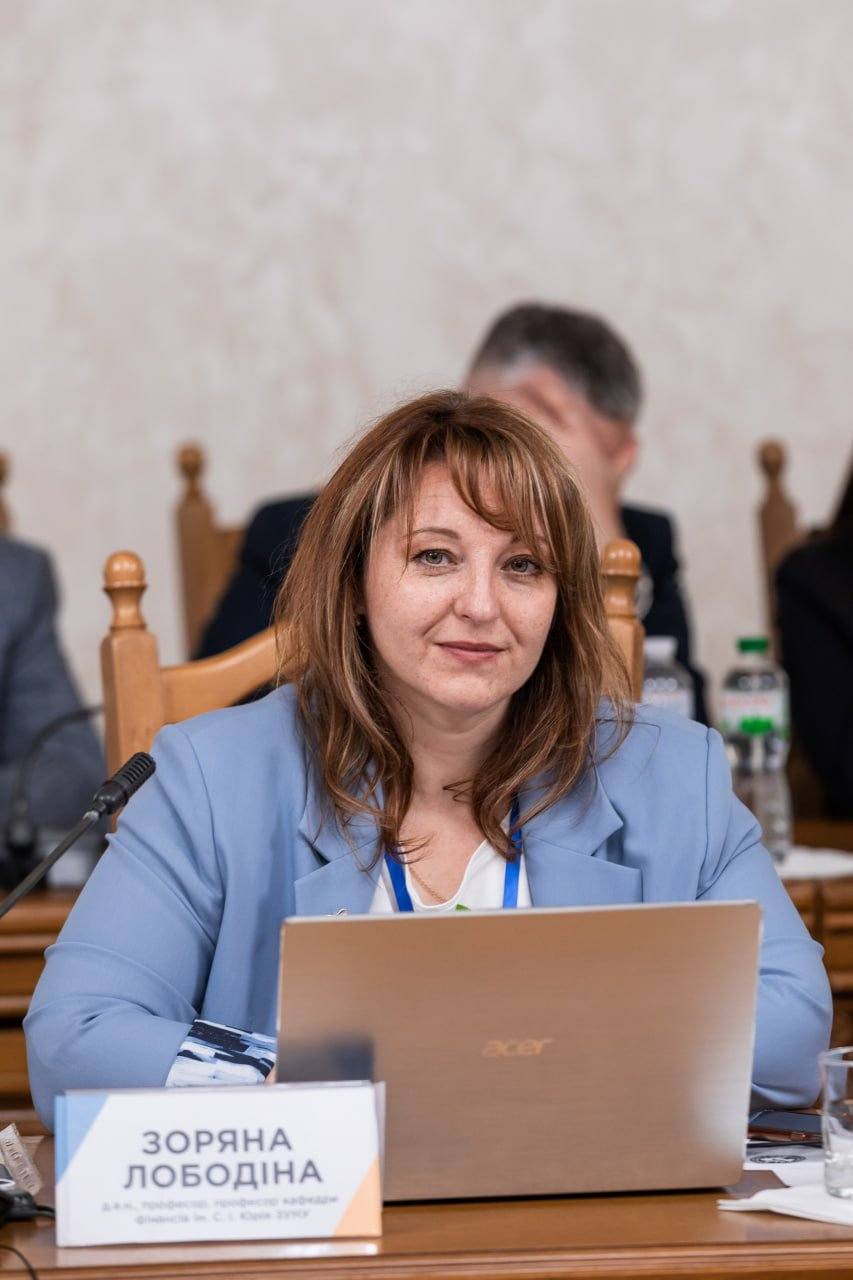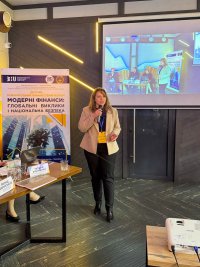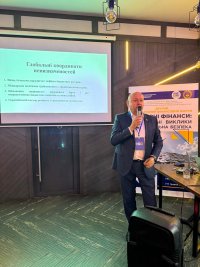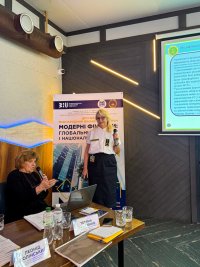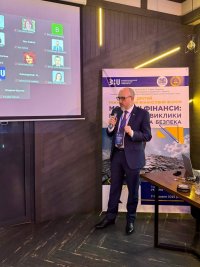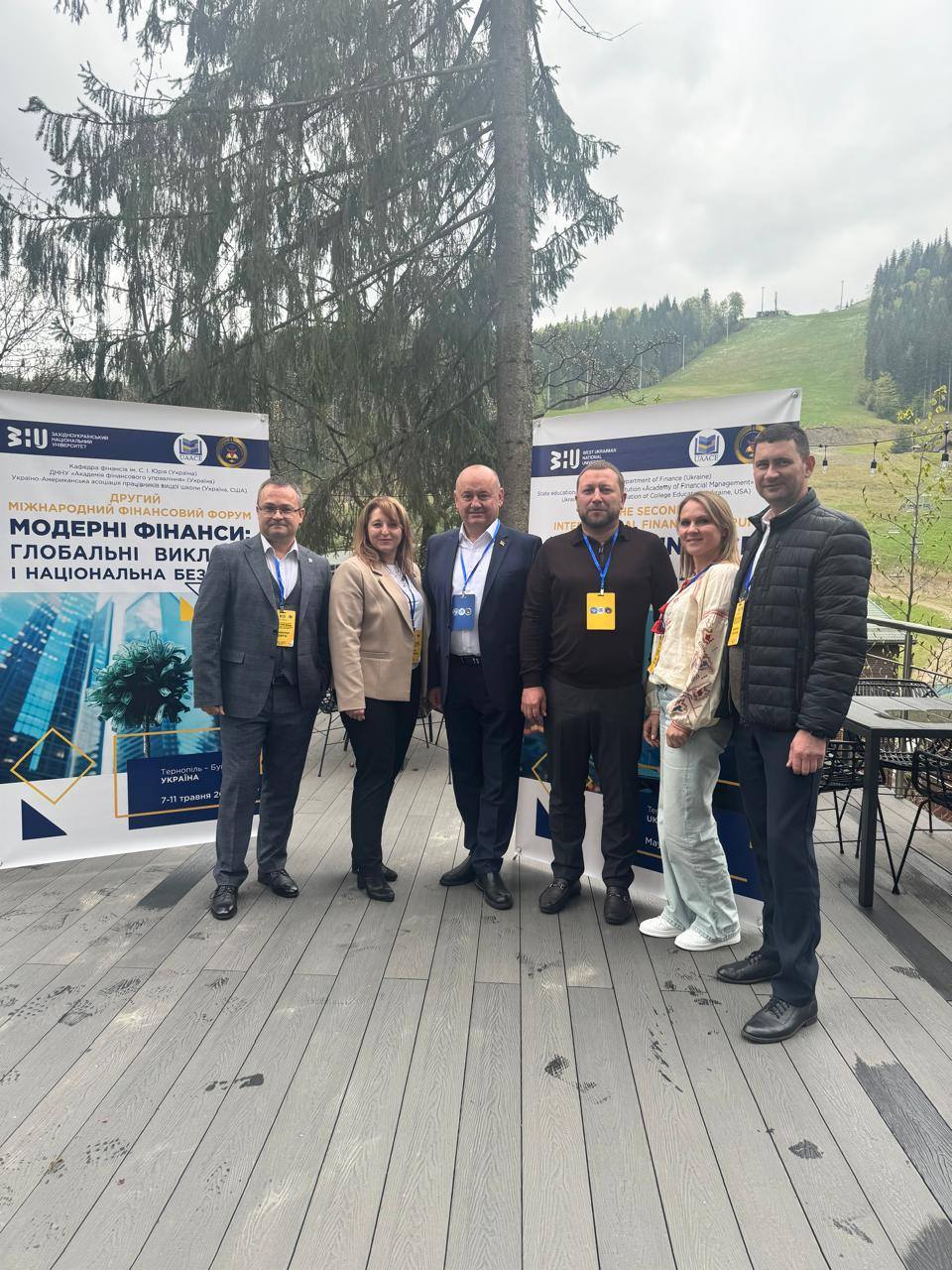


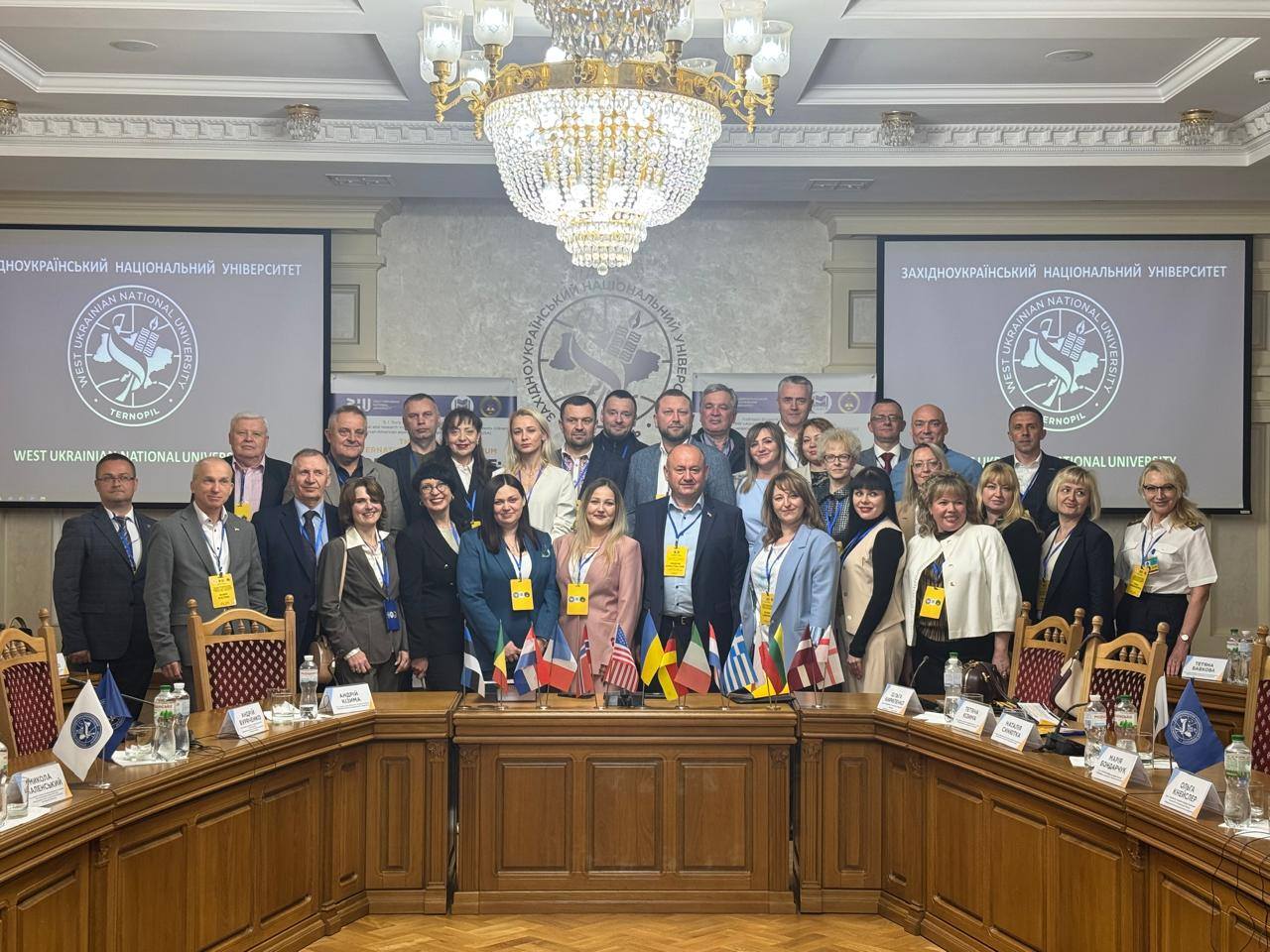
From May 7–11, 2025, the Second International Financial Forum, “Modern Finance: Global Challenges and National Security,” was held. It was organized by the non-governmental organization “Ukrainian-American Association of Higher Education Professionals” and the S.I. Yuriy Department of Finance at the Western Ukrainian National University, in collaboration with the State National University “Academy of Financial Management” of the Ministry of Finance of Ukraine and the Ukrainian-American Association of Higher Education Professionals. The gathering brought together researchers, educators, industry professionals, and international partners to exchange experiences and views on current issues and prospects for the development of the financial sector.
Forum participants took part in the discussion platform “The Realities of Fintech and the E-Hryvnia Paradigm,” which was moderated by the speaker—Doctor of Economics, Professor, Deputy Chairman of the Supervisory Board of PJSC “NPC “Ukrenergo,” Anatoliy Huley, and the vice-speaker—Serhiy Lekar, Doctor of Law, Professor, and Professor in the Department of Tax Administration at the State Tax University.
In his presentation titled “Trends in Fintech Development in Ukraine,” Oleksiy Kalivoshko, Ph.D. in Economics, Associate Professor, and Chief Research Fellow in the Department of Financial, Credit, and Tax Policy at the National Scientific Center “Institute of Agrarian Economics,” National Academy of Agrarian Sciences of Ukraine, drew the forum participants’ attention to the factors influencing the development of fintech. Oleksiy Kalivoshko noted: “The negative factors hindering the development of fintech in Ukraine include: a full-scale war on Ukrainian territory; stagnation and an unstable national economy; expectations of negative trends in the development of the financial market; the absence of a long-term state monetary policy, as well as an opaque and manipulative exchange rate policy; the impoverishment of the population, the forced relocation of part of it, both within and outside Ukraine, and the growth of financial and social inequality.”
Tetyana Nechyporenko, Ph.D. in Economics (Vinnytsia Technical Vocational College), introduced forum participants to the topic “Digital Payment Systems in Ukraine’s Financial Sector: A Catalyst for Development and a Tool for Transformation.” Tetyana Dmytrivna noted: “Digital payment systems are undergoing dynamic development, driving growth in cashless transactions, technological innovation, enhanced security, and compliance with international standards. At the same time, the key determinants are consumer demand for speed, convenience, and security in payments; progress in the fintech industry; government support; and integration with global trends in the digital economy.”
Yaroslav Tchaikovsky, Ph.D. in Economics and Associate Professor at the Western Ukrainian National University, presented a report on trends and challenges in fintech development in the banking, insurance, and securities markets: “The growing demand for digital infrastructure solutions in the financial sector is one of the main drivers of fintech development. Despite challenging market conditions, there are approximately 260 fintech companies operating in the market. The market value of the fintech sector stands at $1.2 billion. At the same time, the technology infrastructure segment continues to show the highest growth: in 2024, its share among companies reached 36%, which is 12% higher than the previous year. This confirms the demand for IT solutions for financial institutions, especially in the context of digital technologies.”
A timely presentation was given by Serhiy Lekar, Ph.D. in Economics, Professor, and Professor in the Department of Tax Administration at the State Tax University, on the topic: “Selected Aspects of Tax Administration in the Introduction of Electronic Money.” The Vice Speaker noted: “Despite certain challenges in tax administration associated with the introduction of electronic money, the government’s actions in this area should be aimed at creating favorable conditions for its development. This is due to the rapid development of new technologies and the fact that this sector is a potential source of tax revenue for the budget. Given the specific nature of electronic money, when developing a mechanism for taxing entities in this sector in Ukraine, it is necessary to take into account basic international provisions regarding the taxation and administration of e-commerce and, based on them, amend the Tax Code of Ukraine. This will help avoid conflicts between the national tax system and the tax systems of EU countries and will contribute to an increase in the volume of transactions in this sector.”
The discussion platform “The Realities of Fintech and the E-Hryvnia Paradigm” concluded with an in-depth presentation by Andriy Krysovaty, Ph.D. in Economics, professor, President of the Ukrainian-American Association of Higher Education Professionals, Chair of the Academic Council and Head of the S. I. Yuriy Department of Finance at the Western Ukrainian National University, Andriy Krysovaty, on the topic: “Institutional Changes in the Public Finance Paradigm Amid Uncertainties.”
Professor Andriy Kryssovaty emphasized: “The global context of uncertainty: war, security issues, international political turbulence, the challenges faced by small countries, budget deficits, and financial market instability are creating new challenges for national economic policy. Key issues include attracting international investment, fostering entrepreneurship, digitizing financial processes, and creating conditions for economic growth. In this context, fintech could become an important tool for transforming the financial system, opening up new opportunities for automation, combating corruption, and effectively managing public finances. Consequently, the modern parameters of a new global coordinate system for the financial space have been identified, reflecting contemporary ideas about energy, consciousness, and the transformation of reality.”
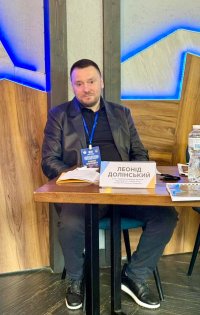
The third day of the forum began with a discussion panel titled “Public Finance Management: Global Challenges Under Martial Law,” moderated by the speaker—Doctor of Economics, Professor, Tetyana Yefimenko, President of the State National University “Academy of Financial Management,” and co-moderator Leonid Dolinsky, Ph.D. in Economics and professor in the Department of Finance at the National University of Kyiv-Mohyla Academy.
Tetyana Ivanivna Yefimenko, speaking about the turbulence in the national fiscal space amid the new economic reality, noted: “In Ukraine, despite martial law and global, regional, and national turbulence, successful reforms of the public finance system—including its fiscal component—are continuing, taking into account international obligations and the roadmap for EU accession. One of the key vectors of strategic transformation is strengthening financial stability and building buffer capacity to withstand potential negative scenarios of future major shocks. In this regard, the priorities for strengthening fiscal resilience and ensuring the country’s long-term economic growth are: countering financial and economic destabilization, overcoming the uncertainty of budget forecasts and preventing an increase in borrowing costs, stabilizing public debt, medium-term budget planning, and monitoring fiscal risks.”
Equally important was the presentation by Leonid Dolinsky, Ph.D. in Economics and professor in the Department of Finance at the National University of Kyiv-Mohyla Academy, on the role of government debt securities in Ukraine’s public finance management system. In his presentation, he outlined the characteristics of Ukraine’s state budget financing: “The sources of financing for the state budget in 2024 were war bonds, bilateral loans, and grants. At the same time, since the start of the full-scale war, there have been periods when war bonds remained the most important source of funding for Ukraine’s state budget. War bonds are available to all enterprises, business representatives, private individuals, and investors. The funds raised through these bonds and allocated to Ukraine’s state budget are used to ensure the uninterrupted financing of the state’s financial needs—both social and defense-related—under martial law. OVDPs can be used as collateral for refinancing with the NBU, have a zero risk weight in the calculation of capital adequacy ratios, and are considered risk-free assets, as they are issued by the state.”
K.Olga Bilyavska, Ph.D. in Economics and Vice Rector for Scientific and Pedagogical Work (Financial and Economic Issues) at Taras Shevchenko National University of Kyiv, introduced participants to the topic “Public Participation in the Formation and Implementation of Budget Policy.” Olga Borysivna noted: “The main factors determining the specific mechanism of public participation in budget policy are: the transparency of budget policy and the budget process; the level of institutionalization of budget policy and the budget process; the extent of public influence on management decision-making; and the inclusiveness of budget policy, which is reflected in the involvement of all segments of the population at various stages of the budget process.”
A report on the socioeconomic realities of taxation during wartime and postwar reconstruction was presented by Volodymyr Valigura, Ph.D. in Economics and Associate Professor at the Western Ukrainian National University: “The socio-economic realities of taxation during wartime in Ukraine include a decline in GDP, high unemployment, the destruction of business capacity and infrastructure, the shadow economy, inflation, rising social expenditures, and dependence on foreign loans and grants. At the same time, the challenges of taxation in the context of post-war recovery include the need to broaden the tax base, rising social expenditures, institutional weakness, imbalances among levels of government in tax collection, a high debt burden, and the need to harmonize the tax system.”
Galina Voznyak, Ph.D. in Economics, Professor, and Leading Research Fellow at the M.I. Dolishnyi Institute of Regional Studies of the National Academy of Sciences of Ukraine” Galina Voznyak presented a report to the participants on the topic: “Financial Policy for Local Economic Development in Ukraine: A Contemporary Vision and Implementation Tools.” Professor Galina Voznyak noted: “Russia’s war against Ukraine has exacerbated economic and financial instability, intensified problems in the system of state and local finances, and triggered negative changes and restrictions on opportunities for economic growth and community development. Consequently, an adaptive financial policy can stabilize the economic situation in communities, improve resource mobilization and investment opportunities for communities, and contribute to the implementation of the European course.”
In her presentation titled “Stages of Measures to Ensure the Accuracy of Customs Valuation in Support of Ukraine’s National Security and Defense,” Olena Zaporozhets, Ph.D. in Economics and Associate Professor at Odessa National Economic University, focused the participants’ attention on methods for determining customs value based on the contract price (contract) for imported goods. The speaker also highlighted the risks associated with changes in the logistics routes used to import goods into Ukraine’s customs territory.
Vladislav Grabovyi—Ph.D. in Economics, Vadym Hetman Kyiv National Economic University—concluded the discussion forum with his presentation titled “Reforming the System of State Financial Control over Public Finances in Ukraine.” Vladyslav Volodymyrovych noted: “Ukraine lacks a comprehensive system of state financial control as a set of control, analytical, and expert activities carried out by external and internal state financial control bodies overseeing public finances. The consequences of the inconsistencies in the public finance control system include the shadow economy, the misuse and inefficient use of public finances, and unstable sources of public revenue. In this context, it is advisable to draft a bill on the public finance control system.”
The participants continued their discussion during the next panel, “Global Turbulence and National Economic Security,” featuring as a speaker Yaroslav Zhalilo, Ph.D. in Economics, Senior Research Fellow, and Deputy Director – Head of the Center for Economic and Social Research at the National Institute for Strategic Studies, Yaroslav Zhalilo; the co-speaker was Yanina Belinska, Ph.D. in Economics and Professor in the Department of Economic Policy, Marketing, and Business Analytics at the State Tax University. Yaroslav Anatoliyovych focused the audience’s attention on the topic “Sources and Drivers of Global Turbulence and Ways to Ensure Economic Security.” He highlighted the risks of globalization to national economic security, the obstacles to the spread of reshoring, and the need for innovative financial instruments. A presentation on the financial dimensions of economic security in the context of global turbulence was delivered by Yanina Belinska, Ph.D. in Economics and Professor in the Department of Economic Policy, Marketing, and Business Analytics at the State Tax University: “The risks of financial globalization include financial digitalization, geopolitical risks, central counterparties, the fragmentation of financial systems, and poor-quality data. Its opportunities include access to global financial flows and a foundation for post-war recovery. At the same time, the key risks include loss of control, vulnerability to crises, cyber threats, financial colonization, monopolization, social inequality, political pressure, and climate threats. In this context, national financial stability policies are crucial amid global turbulence.”
A comprehensive collective study on the security dimensions of the socioeconomic development and resilience of EU countries was presented by Olga Zakharova, Ph.D. in Economics and Associate Professor at the Vasyl Stefanyk Precarpathian National University. The speaker outlined the key areas for strengthening European economic security, the tools for ensuring and protecting it against risks, as well as internal imbalances and threats.
In her presentation titled “The Economic Viability of Cryptocurrency Mining in Today’s Volatile Environment: The Impact of Illegal Mining Activities on Microeconomics and Potential Tightening of Regulatory Oversight,” Tetyana Dmytrenko, Ph.D. in Economics and Head of the Department of International Finance and Financial Security at the Division of Global Economy and International Finance of the Dnipro National University “Academy of Financial Management,” and Valeriya Volkova, a graduate student at the Dnipro National University “Academy of Financial Management,” Valeriya Volkova, drew the forum participants’ attention to the factors affecting the profitability of cryptocurrency mining and regulatory gaps in cryptocurrency mining activities. Valeria Volkova noted: “Cryptocurrency mining conducted under inefficient or non-transparent conditions may indicate risks of tax evasion, electricity theft, money laundering, or even the financing of terrorism.”
The forum participants’ fruitful discussions helped identify new, progressive ideas and pinpoint current trends and global challenges in finance, as well as facilitate the exchange of experiences and best practices to promote Ukraine’s progress and economic growth.
Each participant in the Second International Financial Forum, “Modern Finance: Global Challenges and National Security,” received a certificate.
Let’s work together to promote the development of the financial system and strengthen Ukraine’s economy!