

The best indicator of integration into the EU
Croatia’s accession to the eurozone and the Schengen Area was an unqualified success for the EU’s newest member state. The adoption of the euro was a priority for current Prime Minister Andrej Plenković and Croatian National Bank Governor Boris Vujčić, who touted its benefits to the public. This landmark event took place on January 1, 2023.
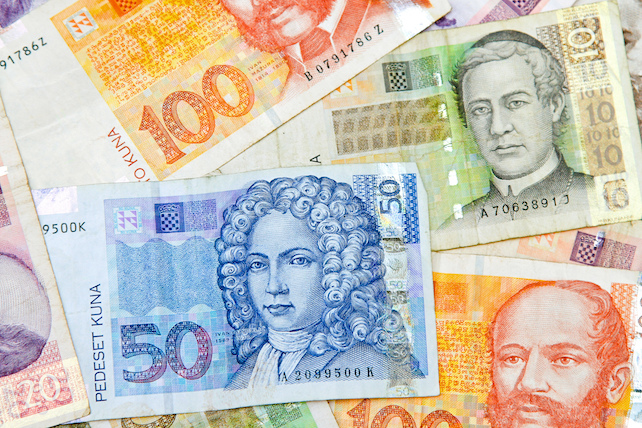
The transition from the kuna to the euro was relatively smooth, as Croatians were already using the single currency (and previously the German mark) in their daily lives, keeping their savings in it, and taking out loans even before their country officially joined the monetary union. About two-thirds of the country’s public debt was denominated in euros.[15] In 2021, EU countries—primarily from the Eurozone, such as Germany, Italy, and Slovenia—accounted for more than 70% of Croatia’s trade. By adopting the single currency, the country achieved greater price stability and reduced currency risk in its trade transactions. Another positive outcome of this move is the growth in foreign investment, which comes primarily from EU member states: Austria, the Netherlands, Germany, Italy, and Luxembourg. The most important sector of the economy has also benefited, as more than half of all tourists come from Eurozone countries. The government in Zagreb hopes that Croatia’s accession to the Eurozone will enhance its political standing within the community, thereby bringing it back on the path to integration.
To Sarajevo via Berlin
After the main foreign policy goals of the early 21st century were achieved with accession to NATO (2009) and the EU (2013), over the past decade, Bosnia and Herzegovina has become one of the most important areas of focus for Croatian diplomacy, which has centered on protecting the interests of Croats living there. All authorities in Zagreb have, to this day, emphasized the importance of this issue. Croats, who live primarily in the southwestern part of Bosnia and Herzegovina, do not have their own entity within this federal state [16]. The Croatian government asserts that this means they are not treated on an equal footing with other peoples of Bosnia and Herzegovina (although they make up only 15% of its population) [17]. Accession to the European Union in 2013 gave Croatia the opportunity to play a greater role in the Western Balkans, with a particular focus on Bosnia and Herzegovina. The strength of Croatia’s political influence is evidenced by the fact that Bosnian Croats have long been represented by the Croatian Democratic Community of Bosnia and Herzegovina (HDZ BiH), a branch of the HDZ, which has been in power in Croatia for years.
Croatia built its status within the EU primarily on the basis of close relations with Germany, which openly supported its statehood on the eve of Yugoslavia’s breakup. Particularly important in this regard are the HDZ’s relations with the German Christian Democrats and its cooperation with them within the European People’s Party. One of the Christian Democrats in the European Parliament is the current High Representative for Bosnia and Herzegovina, Christian Schmidt (who has held this position since August 1, 2021). He previously served as Germany’s Federal Minister of Food and Agriculture and maintained close ties with the government in Zagreb for many years[18]. Schmidt’s acceptance of the Ante Starčević Order (a high state honor) from the Prime Minister of Croatia in 2020 sparked significant controversy on the Bosnian political scene. The outrage among Bosnian leaders was compounded by the fact that convicted war criminals had previously been awarded this order. The High Representative, who holds broad powers in Bosnia and Herzegovina, also sparked controversy by introducing a series of changes favoring Croats [19]. From the perspective of the government in Zagreb, Schmidt’s actions were appropriate and placed Bosnian Croats in a more equitable political position. At the same time, his moves strengthened centrifugal forces in Bosnia and Herzegovina and contributed to the deepening of the current institutional crisis, which poses a challenge for Croatia regarding the stability of its neighbor.
Assessment and Outlook: Unity Above All Else
Croatia’s first decade of EU membership was a period of moderate but noticeable economic growth. Due to domestic factors such as corruption, institutional weakness, and excessive dependence on a single economic sector, Croatia has been unable to fully realize the potential of its EU accession. The free movement of people within the EU has led to one of Croatia’s biggest problems: emigration and a gradual decline in population. Despite a noticeable convergence in development levels between Croatia and the “old” EU member states, disparities are growing within Croatia itself: between the more prosperous coast and the capital, on the one hand, and the inland (primarily northeastern) part of the country, on the other. Negative demographic trends also pose challenges for tourism, as residents of inland regions (primarily Slavonia) have traditionally catered to crowds of visitors from other countries during the summer seasons. In 2022, a record 18.9 million tourists visited Croatia—five times the country’s total population.
EU membership increases Croatia’s chances of becoming a regional energy hub. EU support has made it possible to build a floating LNG terminal, the importance of which has grown significantly in light of the war in Ukraine and the shift away from Russian resources. In addition, EU funding will support plans to expand current import capacity and build a new gas pipeline to Slovenia. Gas from the Croatian terminal will help diversify supplies to Austria, Bosnia and Herzegovina, Germany, Slovenia, and Hungary, thereby strengthening Croatia’s position in the region. Croatia is also enhancing its standing in Europe by participating in various regional cooperation frameworks, although this participation has been inconsistent to date. The “Three Seas” Initiative was launched in 2015 at the initiative of the presidents of Poland and Croatia, but Croatia’s involvement in the project has significantly declined since Zoran Milanović succeeded Kolinda Grabar-Kitarović as president. The current president is skeptical of this initiative, fearing that Croatia’s membership in it could lead to a serious deterioration of its relations with Germany.
Croatia has successfully leveraged its EU membership to advance its own foreign policy goals: the government has succeeded in placing the issue of Croats living in Bosnia and Herzegovina on the agenda of European debates. For Croatia, EU integration also offers advantages in terms of the enlargement process involving the Western Balkan countries. Indeed, three countries located in close proximity to Croatia are seeking to join the EU: Bosnia and Herzegovina, Montenegro, and Serbia. The dispute with Slovenia has shown that the negotiating position of a country that is already an EU member is much stronger. This issue could prove decisive, as Croatia is still grappling with unresolved border disputes, the aftermath of the wars of the 1990s, and the struggle for the status of the Croatian minority in these countries. Nevertheless, any attempts to force these countries to make concessions by threatening to block their accession process could undermine Croatia’s standing in the region once these countries join the EU.
Paulina Wankiewicz