

Ten Years of Croatia's Membership in the European Union
Ten years ago, on July 1, 2013, the Republic of Croatia became a member of the European Union. Although it is the newest member of the EU, it is one of the countries in Southeast Europe that has made the most progress in the integration process.
In 2023, it was admitted to the Schengen Area and the Eurozone, something that Bulgaria and Romania were unable to achieve, even though they had joined the EU several years earlier. EU membership has brought Croatia certain economic benefits, such as stable economic growth, a gradual rise in living standards, and a decline in unemployment. However, poor absorption of EU funds, the inefficiency of state institutions, and structural problems in the national economy have prevented it from fully capitalizing on these opportunities. Moreover, the free movement of people has exacerbated negative demographic trends. Nevertheless, Croatia has benefited to some extent from its EU membership. Thanks to the EU-funded LNG terminal on the island of Krk, it has the opportunity to become a key player in ensuring energy diversification in the region. Croatian officials have successfully used their presence in EU institutions to elevate the issues facing their compatriots living in Bosnia and Herzegovina to the level of transnational debate. However, it appears that Croatia has not been able to fully capitalize on its leverage in the Western Balkans.
From Euroskeptics to Moderate Euro-Optimists
Croatia’s integration into the EU began ten years after it gained independence in 1991. To achieve this goal, the country had to be democratized. This process gained momentum after 1999, following the death of President Franjo Tuđman, the architect of the country’s independence and a politician with authoritarian tendencies. Initially, public opinion regarding the country’s potential EU membership was negative. At the root of this Euroscepticism was a reluctance to cede power from the newly formed state. Opponents of EU accession also believed that Croatia was too small to have any real influence on the European stage. In addition, the issue of cooperation with the International Criminal Tribunal for the former Yugoslavia (ICTY)—one of the political conditions for rapprochement with the EU—was highly contentious. The 2011 arrest and conviction by the Hague Tribunal of retired generals Ante Gotovina and Mladen Markač fueled public discontent, as the public viewed them as national heroes rather than war criminals. That year, only 23% of Croatians expressed support for the country’s integration into the EU.[1] In 2012, the two men were acquitted.
The escalation of the territorial dispute with Slovenia has fueled Euroskepticism. Slovenia has agreed to allow Croatia to move forward with European integration, contingent on a favorable delimitation of the maritime border between the two countries in the Bay of Piran. Fearing the outcome of the accession referendum, the Croatian government waived the 50 percent voter turnout requirement. Although 66% of citizens ultimately voted in favor of EU accession in 2012, the meager enthusiasm for accession was reflected in voter turnout—only 43%, one of the lowest rates in EU history. However, the Croatian people gradually gained trust in the EU and its institutions, mainly due to disappointment with their own political class. According to a survey conducted in 2013, in the year the country joined the EU, 36% of Slovenians trusted EU institutions, while trust in their own government and unicameral parliament, the Sabor, stood at only 16% and 12%, respectively [2]. In the same survey, conducted ten years later, 52% expressed trust in the EU, while only 23% trusted both the government and the national parliament [3].
An economy dependent on tourism
Strong economic performance in the post-accession period, popular EU-funded projects, and successes in joining the eurozone and the Schengen Area (especially compared to Romania and Bulgaria, which remain outside these integration frameworks) likely contributed to the positive assessment of the country’s EU membership.
However, Croatia has not yet been able to use its accession as a catalyst to overcome the major challenges facing the country, such as low labor productivity, widespread corruption (the country ranks fourth in the EU in terms of perceived corruption levels)[4], a shortage of skilled labor, and emigration.
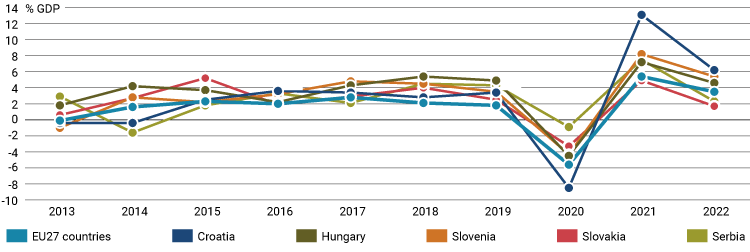
Figure 1. Economic growth trends in Croatia compared to other countries in the region.
Croatia joined the EU while still feeling the effects of the 2008 global financial crisis in the form of a prolonged recession. Access to the single market and EU funds allowed it to return to a path of stable (albeit not very high) growth, which averaged 2–3% of GDP between 2015 and 2020. This, in turn, led to an increase in GDP per capita at purchasing power parity relative to the EU average—from 61% in 2013 to 73% in 2022. However, Croatia started from a higher level than many other countries in the region: when it joined the EU, its GDP per capita was already higher (about 10,500 euros) than inEU member states in the region (including Hungary, Poland, Romania, and Bulgaria); in 2022, it stood at 14,500 euros, slightly lower than in Poland. The country grew more slowly than its neighbors Hungary and Poland, but at the same rate as Serbia, which is not an EU member[5] (see Figure 1). The most notable achievement during this period was the decline in the number of unemployed. In 2013, the unemployment rate stood at 17.25%, and by 2022 it had fallen to just 6.75% (one of the best results in the history of independent Croatia; see Figure 2). However, the 10-point decline over this decade is attributable not only to a favorable economic situation but also to negative demographic trends and labor emigration.
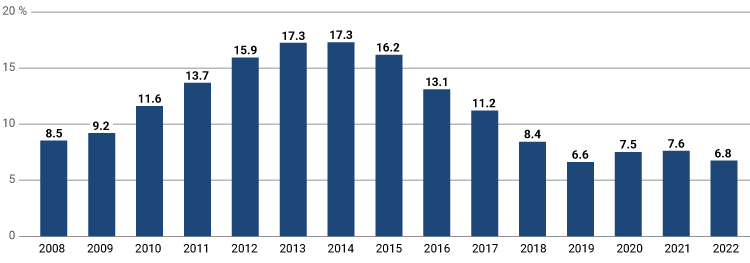
Figure 2. Unemployment Rate in Croatia, 2008–2022
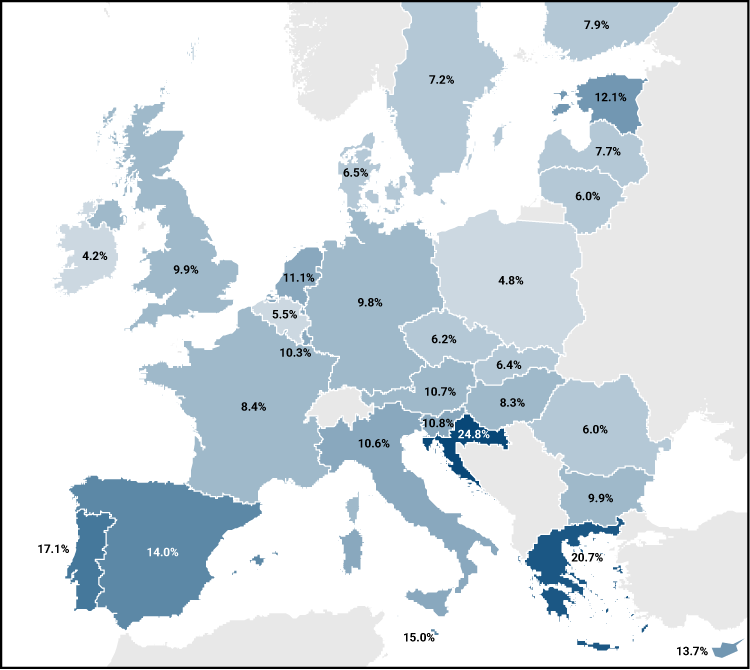
Figure 1. Tourism’s Share of GDP in EU Countries in 2019
The service sector has been the backbone of the Croatian economy for a decade: it accounts for 74% of the country’s GDP. Industry (including construction) accounts for 23% of GDP, while agriculture accounts for 3%. The main problem is the country’s continued dependence on tourism, which generates 25% of its GDP (see Map 1)[6], making it extremely vulnerable to external factors. For example, Croatia’s GDP fell by 8.5% in 2020 during the COVID-19 pandemic. This is the Croatian version of the so-called “Dutch disease”—a strong dependence of the economy on a single, rapidly growing sector. Croatia’s GDP dependence on this sector is much higher than that of European tourism giants such as Spain and Italy. Furthermore, this exacerbates disparities in development, unemployment rates, and living standards between the coastal and inland regions of the country, which the redistribution of budgetary resources has only marginally mitigated. Such a heavy emphasis on tourism development also contributes to the neglect of other economic sectors and the deepening of the country’s deindustrialization, which has led to a negative foreign trade balance (–11 billion euros in 2021).
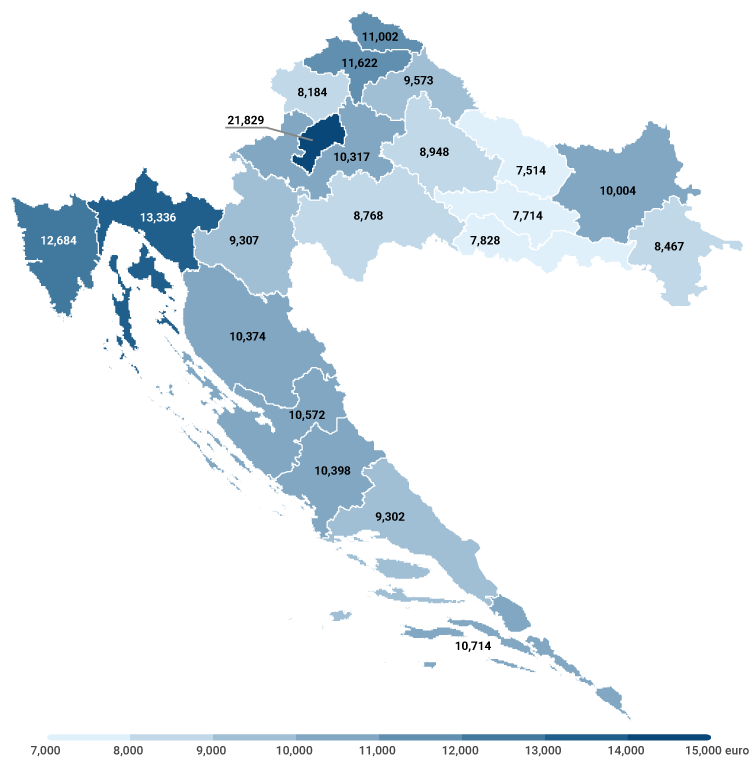
Map 2. GDP per capita in selected regions of Croatia in 2020