

In our opinion, the following key stages in carrying out this activity in its traditional form should be highlighted (Fig. 1):
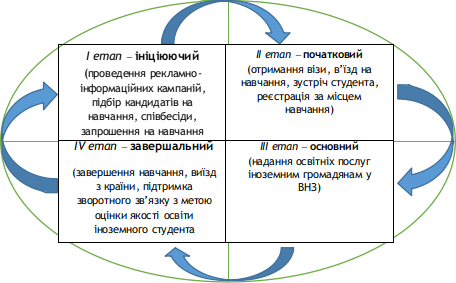
Fig. 1. Diagram of the phased implementation of the export of higher education services by universities under the traditional form of study
- initiating (advertising and informational activities in other countries aimed at attracting foreign citizens to study);
- Initial stage (obtaining a student visa, entering the country, registering, and obtaining legal status for residence and study);
- primary (directly providing educational services to foreign citizens);
- final stage (completion of studies, graduation of certified professionals, ongoing follow-up, assessment of graduates’ satisfaction with the quality of their education, and evaluation of how well it meets the expectations of employers in the host country).
In the initial stage of organizing a cross-border form of export, the following steps are taken: the official registration and establishment of a branch of the educational institution abroad, the transfer of fixed assets and capital abroad, recruiting faculty, preparing educational and methodological materials, obtaining the necessary licenses and permits, leasing or purchasing premises, and carrying out a range of organizational and preparatory tasks. The most challenging aspect at this stage is reconciling all the specific features of the relevant legal and regulatory frameworks of several entities—the exporting country and the countries where the branches are being established—as well as general and treaty-based norms of international law.
In the context of distance learning for international students, it is of the utmost importance to establish both a legal framework for organizing this form of education and to ensure an adequate level of development of modern information and communication technologies for education (Internet technologies, e-learning, etc.).